
A commandment with a promise.
Twice a year the chapel gathers its mothers, and then its fathers, outside for a photograph. Here is what we believe those two Sundays are for — and why the honour owed to parents was never meant to stop at the front door.
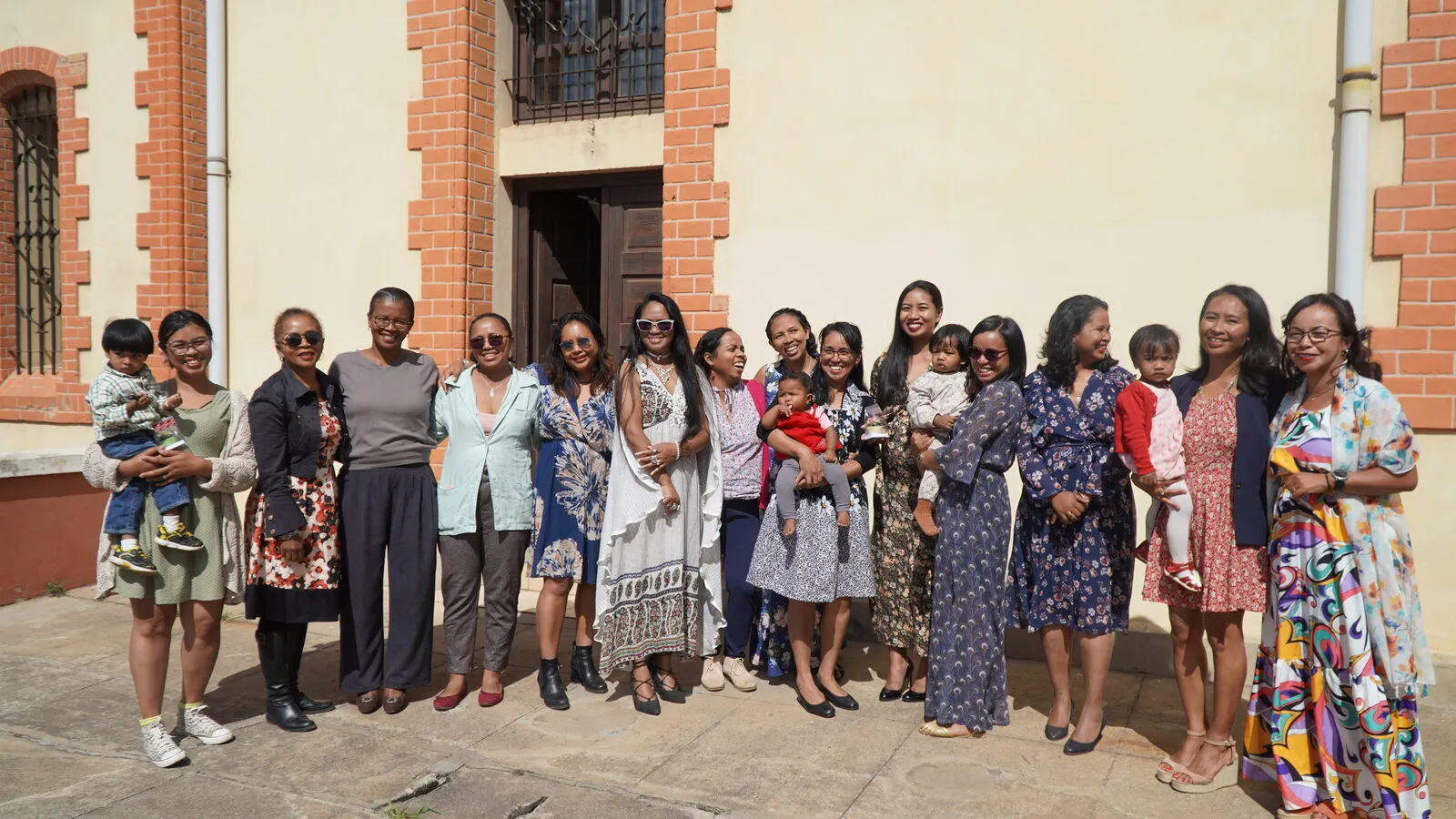
Twice a year the ECA family lines up in the sun outside the chapel and someone takes a photograph. On one of those Sundays it is the mothers, several with a child on the hip and one small boy refusing to look at the camera. On the other it is the fathers, the babies handed over for the occasion, the oldest man among us crouched in the middle of the row and grinning. Two pictures, one church, and — we think — one subject.
The hinge of the ten
Honour your father and your mother, so that you may live long in the land the Lord your God is giving you.
Exodus 20:12
It is the fifth of the ten commandments, and it sits on the hinge. The four before it govern how a people treats God; the five after it govern how they treat each other. The turn from the one to the other is made at the door of a house. Before Israel hears a word about murder, adultery, theft or false testimony, it is told how to regard the two people who raised it.
Paul notices something else about it. Quoting the commandment to a young church, he slips in an aside: it is the first commandment with a promise — so that it may go well with you and that you may enjoy long life on the earth. Read that slowly. The promise is not made to the parents, as a reward for their trouble. It is made to the child who keeps it. Honour is not a debt the young settle with the old; it is how a people stays coherent long enough to hand anything on at all.
Ray aman-dreny
Malagasy has been saying this in a single phrase for a very long time. Ray aman-dreny — literally father and mother — is what you call the two people at home. It is also what you call the elders of a community, and anyone entrusted with its care. The words refuse to stay inside the household. They walk out into the street and come to rest on whoever carries responsibility for others, which is a fair summary of what Scripture does with exactly the same vocabulary.
Do not rebuke an older man harshly, but exhort him as if he were your father. Treat younger men as brothers, older women as mothers, and younger women as sisters, with absolute purity.
1 Timothy 5:1–2
Paul is teaching a young pastor how to run a church, and the only vocabulary he reaches for is family vocabulary. Not staff and members. Fathers, mothers, brothers, sisters. For a congregation like ours that instruction is not sentimental, it is logistical: many in the chapel live thousands of kilometres from their own parents, and their children are growing up without a grandmother two streets away. Somebody has to be the grandmother. Church is where that gets arranged.
What parents are actually asked to do
These commandments that I give you today are to be on your hearts. Impress them on your children. Talk about them when you sit at home and when you walk along the road, when you lie down and when you get up.
Deuteronomy 6:6–7
The great parenting text of the Old Testament is striking for how ordinary it is. There is no curriculum and no hour set aside. There is sitting, walking, lying down, getting up — the four postures of a normal day. Faith is handed over in the margins: in the car on the way to school, over a plate of rice, in the two minutes before the light goes out. That is a relief and a demand at once. Nobody has to be an expert, and nobody is ever off duty.
The New Testament attaches a warning to the same commission: fathers, do not exasperate your children, but bring them up in the training and instruction of the Lord. The two halves belong together. Authority that provokes has already failed at the thing it was given for. A child being formed and a child being worn down can look alike from the outside for a while; they do not end up in the same place.
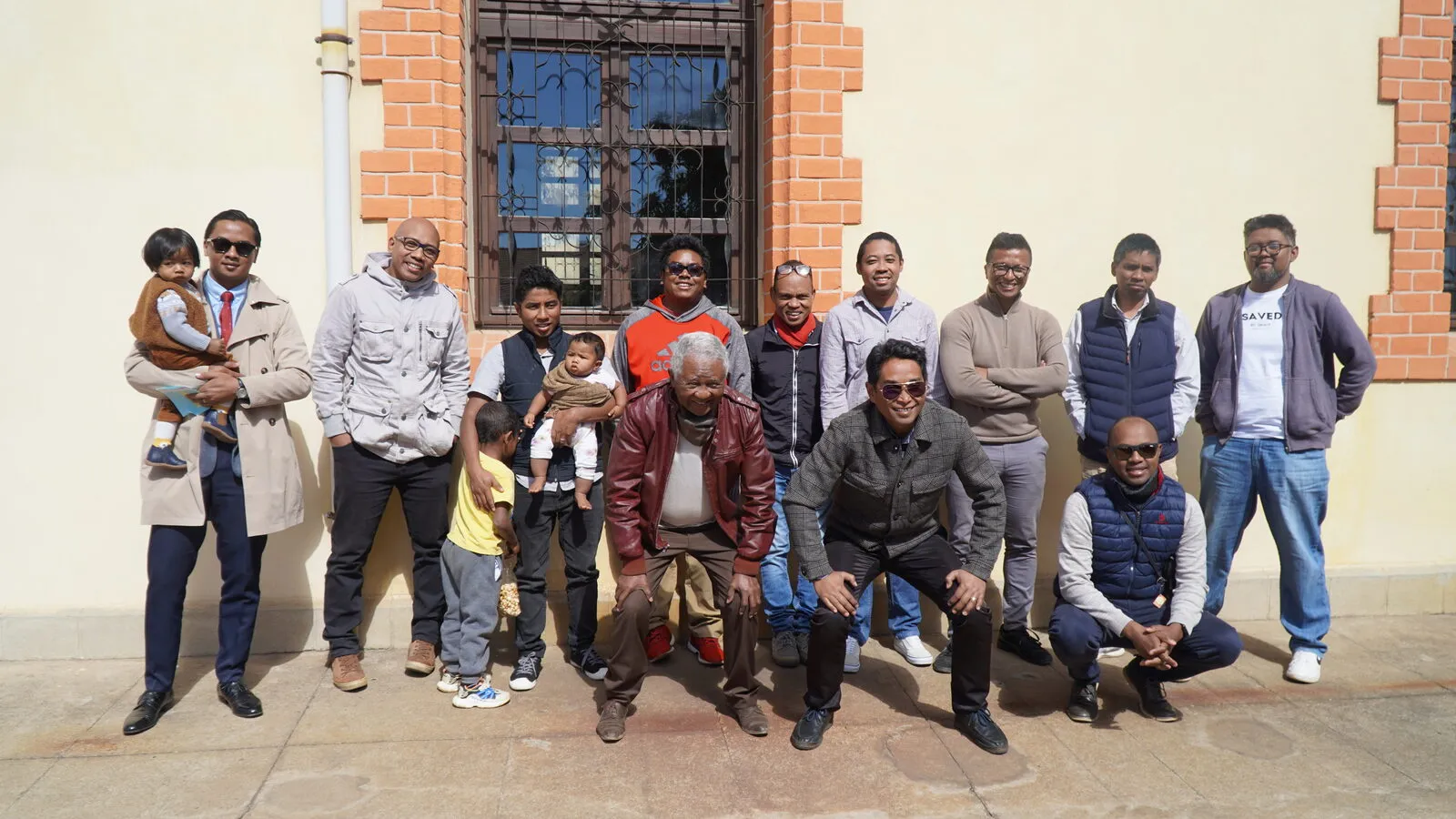
And now and then Scripture simply names the people. Writing to Timothy, Paul remembers a sincere faith which first lived in your grandmother Lois and in your mother Eunice and, I am persuaded, now lives in you also. A grandmother, a mother, a son: three generations, named, in one sentence. That is the entire hope behind a photograph like these.
Nobody raises children alone
A congregation is one of the few places left where a child is known by adults who are neither their teachers nor their relatives. The Sunday school worker who has taken the same age group for years. The woman who lifts a crying baby out of a young mother’s arms without being asked, so she can hear the sermon. The older men who ask a teenager what he is studying and then remember the answer a month later. Titus tells the older women to teach the younger ones how to love their husbands and their children — a whole apprenticeship, assumed rather than organised.
No one raises children well alone, and Scripture never assumes anyone should have to.
The promise runs in both directions
Stand up in the presence of the aged, show respect for the elderly and revere your God.
Leviticus 19:32
Honour has a second season, and it is the harder one. The children in these photographs will one day be the strength their parents no longer have. Paul is blunt about it: children and grandchildren should learn first of all to put their religion into practice by caring for their own family and so repaying their parents and grandparents, for this is pleasing to God. Repaying. A few lines later, a household that will not care for its own is said to have denied the faith.
That is not only private arithmetic. It is why the chapel visits members in hospital, stands with families in bereavement, and keeps a common purse for the households that are struggling. Honouring your parents and caring for one another are the same instinct measured at two different distances.
The other fifty Sundays
None of this needs a special day. On an ordinary Sunday it looks like a teenager greeting an elder by name instead of walking past him. A father in the second row with a toddler asleep on his shoulder for the whole sermon. A grandmother in a plastic chair being asked what she thinks, and then actually listened to. Two Sundays a year we take a photograph. The other fifty are where the work is done.
He will turn the hearts of the parents to their children, and the hearts of the children to their parents.
Malachi 4:6
There is room for your family here.
We gather every Sunday at 10:00 in the heart of Antananarivo — children and grandparents included, English and French speakers equally at home.